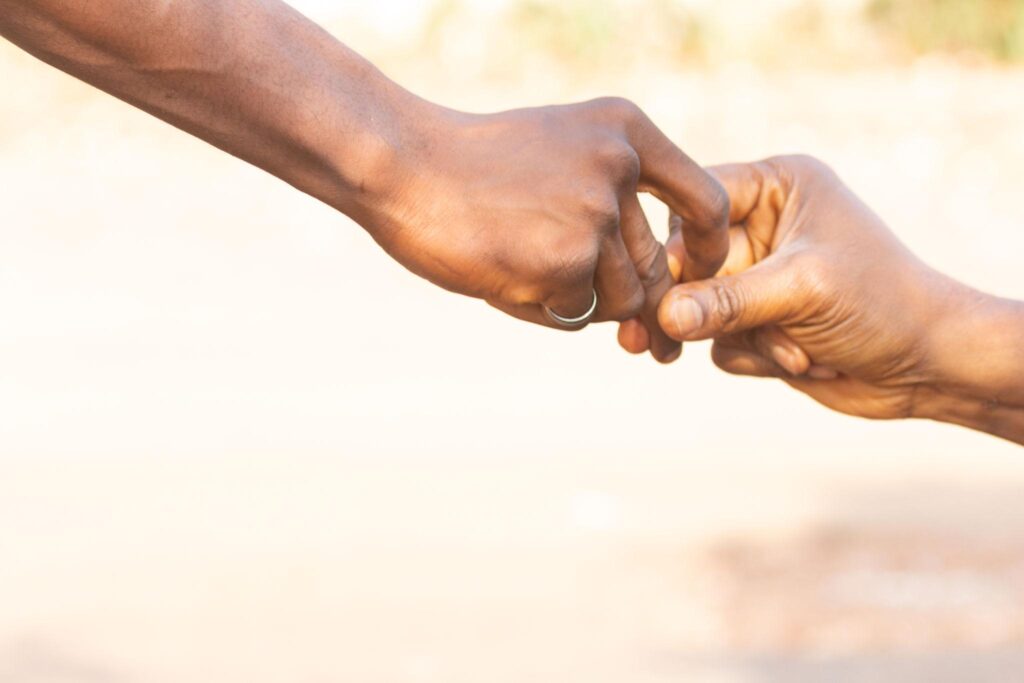
Trust is expensive these days.
Not because it is rare, but because everyone talks about it while simultaneously doing the opposite: ghosting responsibilities, screenshotting private conversations, and saying “I’m five minutes away” while still showering. (Before I proceed, allow me to say, if I am ever considered anything at all, let it be trustworthy.)
Yet despite all this chaos, trust remains one of the most important human inventions ever created. Entire economies run on it. Relationships survive because of it. Friendships collapse without it. Even your boda guy trusting that you will pay after the ride is a tiny act of civilization.
Trust is invisible, but somehow it holds the world together better than Wi-Fi.
Etymology of the Word Trust
The word trust comes from the Old Norse word traust, meaning confidence, protection, strength, or reliance. Interestingly, its linguistic cousins relate to words meaning “solid” and “firm.”
That means trust was never originally about emotions alone. It was about stability.
A trusted person was someone dependable. Predictable. Safe.
Not someone who says “I got you” and disappears like a government project.
Over time, the word evolved into the emotional and social meaning we use today: confidence in the integrity, honesty, and reliability of another person.
Humanity has been trying to figure it out ever since.
The Esoteric Meaning of Trust
Beyond language, trust has always carried a deeper, almost spiritual meaning.
Esoterically, trust represents surrender without guaranteed control.
It is the conscious decision to become vulnerable despite uncertainty.
That is why trust feels so powerful. When you trust someone, you are essentially telling them:
“I believe you will not use my vulnerability against me.”
That is sacred.
Ancient philosophies often viewed trust as a bridge between souls. In many traditions, trust was tied to faith — not blind faith, but earned confidence built through consistency and truth.
In simpler terms, trust is repeated honesty over time.
Not motivational quotes.
Not aesthetics.
Not “good vibes only.”
Consistency. Stability. Solid
Why We Should We Build Trust?
Life becomes dramatically easier when people trust you.
Think about it.
People recommend trustworthy people for jobs.
People open doors for trustworthy friends.
People invest in trustworthy businesses.
People forgive trustworthy partners faster.
People follow trustworthy leaders willingly.
Trust reduces friction in human interaction.
Without trust, every conversation becomes an interrogation.
Even psychologically, trust lowers anxiety. When we trust the people around us, our brains spend less energy preparing for betrayal. We relax. We communicate better. We collaborate better.
In a noisy world full of performance, authenticity stands out.
The Small Habits That Build Trust
Building trust is less dramatic than movies make it seem.
Usually, it comes from very boring things:
1. Keeping your word
If you say you will call at 3 PM, call at 3 PM.
2. Being honest early
Small lies grow teeth later.
3. Consistency
People trust patterns.
4. Accountability
A sincere “I was wrong” repairs more than defensive excuses ever will.
5. Confidentiality
If someone tells you something privately, do not turn it into a podcast episode for your friend group.
Trust grows slowly but breaks easily. Fragile.
Trust In Relationships
Every healthy relationship is essentially an emotional agreement built on trust.
Love without trust quickly becomes surveillance.
You start checking last seen timestamps like an FBI analyst.
You overthink delayed replies.
You become suspicious of harmless things.
That is exhausting.
Trust allows people to feel emotionally safe. It creates peace.
And, I believe, contrary to popular belief, trust is not the absence of doubt. It is the decision that someone’s character matters more than your fear.
One of the most famous anecdotes about trust comes from the story of the Trojan Horse in Greek mythology.
The Trojans believed the wooden horse was a peace offering. They trusted the gesture and welcomed it into their city. Unfortunately for them, Greek soldiers were hidden inside.
Boom. Troy fell.
The story survived for centuries because it perfectly captures humanity’s eternal dilemma:
Trust is necessary, but misplaced trust can destroy us.
That is why wisdom matters. Trust should not be given blindly. It should be built carefully, through observation, consistency, and character.
Trust Is A Real Flex
In modern culture, people flex money, aesthetics, followers, and lifestyles.
But genuinely trustworthy people?
Rare.
A person who keeps their promises, respects boundaries, communicates honestly, and remains dependable even when inconvenient is more valuable than they realize.
Because at the end of the day, trust is not built through grand speeches.
It is built in tiny moments:
Showing up.
Being truthful.
Remaining consistent.
Protecting people’s dignity when they are not in the room.
Trust is invisible, yes.
But somehow, it is still one of the strongest things humans can ever create.
Click this link for more resources on trust and ethics.